Government Inventory Management: Best Practices for Compliance and Efficiency
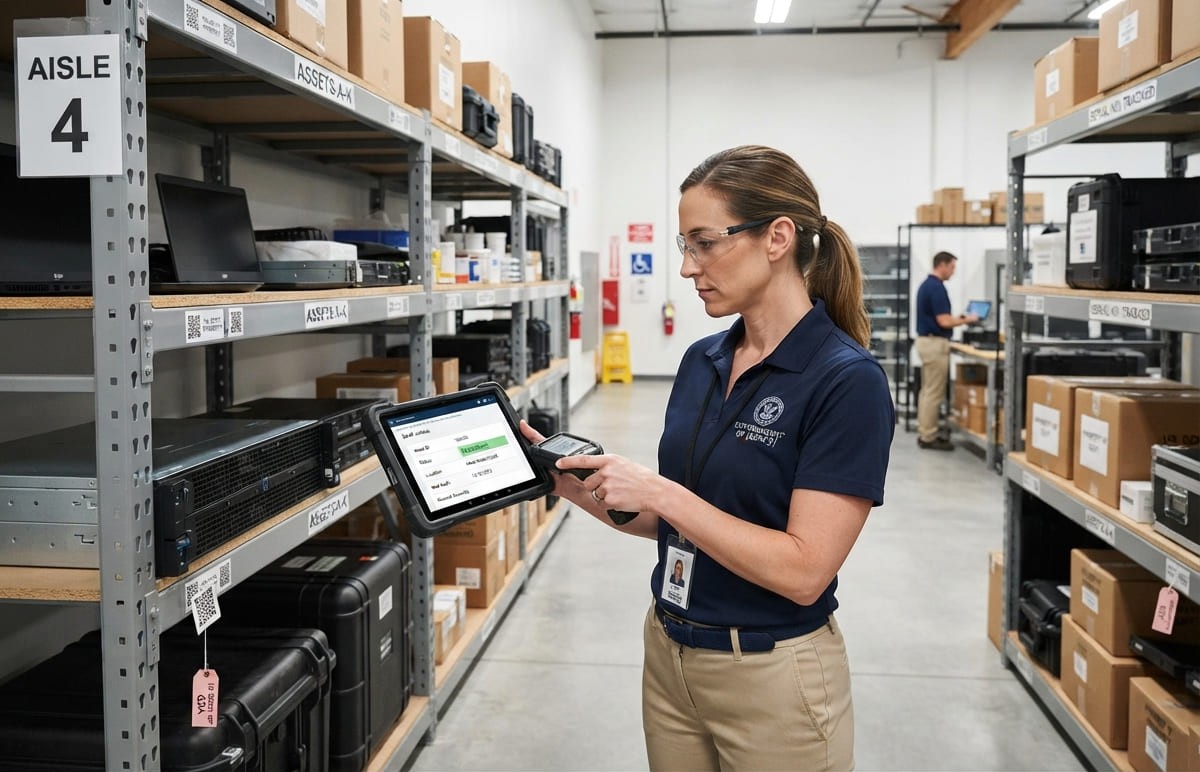
Government organizations manage thousands of assets, supplies, equipment items, and materials across multiple departments and locations. Maintaining accurate records of these resources is essential for accountability, operational efficiency, financial transparency, and regulatory compliance.
Unlike traditional commercial inventory management, government inventory management requires stronger controls because public assets must be tracked throughout their entire lifecycle, from procurement and receiving to assignment, maintenance, reconciliation, and disposal.
A well-structured government inventory management system helps agencies maintain accurate inventory records, reduce waste, prevent asset loss, improve audit readiness, and make better decisions about resource allocation. Government inventory practices emphasize knowing what assets exist, where they are located, who is responsible for them, and how they are being used. Accurate records and physical verification processes are considered essential for effective inventory accountability and operational performance.
What Is Government Inventory Management?
Government inventory management is the process of controlling, tracking, and maintaining government-owned assets, supplies, equipment, and materials throughout their lifecycle.
It includes:
Inventory purchasing and receiving
Asset registration and identification
Storage and warehouse management
Inventory tracking and movement
Physical inventory verification
Asset assignment and custody management
Inventory reconciliation
Reporting and compliance documentation
Asset disposal and retirement
Government agencies use inventory management processes to ensure that public resources are available when needed while preventing unnecessary purchases, duplicate assets, losses, and inaccurate financial reporting.
A strong inventory system provides visibility into:
What assets are available
Where assets are located
Who manages each asset
Current asset condition
Usage history
Maintenance records
Disposal status
Why Government Inventory Management Matters
Government inventory represents significant public resources. Poor inventory control can lead to inaccurate records, excess purchasing, missing equipment, inefficient storage, and compliance issues.
Effective government inventory management improves:
1. Asset Accountability
Every government asset should have a clear record containing information such as:
Asset identification number
Serial number
Purchase date
Acquisition cost
Current location
Assigned custodian
Asset condition
Transaction history
This creates accountability by connecting physical assets with digital records.
2. Audit Readiness
Government organizations must often demonstrate that inventory records match actual physical assets.
Regular physical inventory counts, cycle counting, and reconciliation help identify:
Missing assets
Incorrect records
Inventory discrepancies
Damaged items
Obsolete stock
Accurate physical counts and reliable inventory data support better budgeting, financial reporting, and operational decision-making.
3. Better Resource Utilization
Government inventory management helps agencies identify unused, excess, or underutilized resources.
Instead of purchasing additional equipment, organizations can:
Locate existing assets
Transfer unused inventory
Improve asset utilization
Reduce unnecessary spending
Best Practices for Government Inventory Management
1. Maintain Accurate Inventory Records
The foundation of effective inventory control is accurate and complete data.
Each inventory record should include:
Item description
Asset ID
Serial number
Quantity
Location
Custodian information
Purchase details
Current status
Maintenance history
Incomplete records create challenges during audits and make it difficult to understand available resources.
A centralized inventory database ensures that all departments work from consistent and updated information.
2. Implement Physical Inventory Verification
Physical inventory counts verify whether recorded assets match actual assets.
Common verification methods include:
Annual Physical Inventory
A complete inventory review performed periodically to validate asset records.
Cycle Counting
A continuous approach where smaller groups of inventory items are counted regularly.
Spot Checks
Random verification of selected assets to identify discrepancies early.
Physical verification should include documented procedures, responsible personnel, review processes, and reconciliation of differences.
3. Use Asset Tracking Technology
Modern government inventory management increasingly relies on digital tools instead of manual spreadsheets.
An inventory management system can provide:
Real-time inventory visibility
Automated reporting
Digital audit trails
Asset movement tracking
User permissions
Automated alerts
Common tracking technologies include:
Barcode Inventory Tracking
Barcode labels allow organizations to quickly identify assets during receiving, transfers, and physical counts.
QR Code Asset Tracking
QR codes provide quick access to asset information using mobile devices.
RFID Inventory Tracking
RFID technology enables faster identification of multiple assets and improves inventory accuracy in large environments.
Digital inventory systems help agencies maintain records of asset location, condition, status, and movement history.
4. Establish Strong Internal Controls
Internal controls protect government assets from misuse, loss, and inaccurate reporting.
Important controls include:
Role-based access control
Approval workflows
Segregation of duties
User activity tracking
Asset custody procedures
Inventory review processes
For example, the employee responsible for approving purchases should not always be the same person responsible for receiving and recording inventory. Strong controls improve transparency and reduce the risk of inventory errors.
5. Improve Inventory Compliance
Government inventory compliance requires organizations to follow established policies, documentation standards, and reporting procedures.
Compliance practices include:
Maintaining complete inventory records
Performing regular physical counts
Documenting asset transfers
Recording disposal activities
Keeping audit documentation
Following property management procedures
Compliance is not only about passing audits; it also ensures that government resources are managed responsibly.
6. Manage the Complete Asset Lifecycle
Government inventory management should cover the entire asset lifecycle.
Acquisition
The process begins when assets are:
Purchased
Received
Registered
Tagged
Added to inventory records
Utilization
During use, organizations should track:
Asset assignment
Location changes
Maintenance activities
Condition updates
Disposal
When assets are no longer useful, agencies should follow proper disposal procedures.
This includes managing:
Excess inventory
Surplus property
Obsolete equipment
Damaged assets
Lifecycle management prevents inactive assets from remaining unnoticed in storage.
7. Reduce Excess and Obsolete Inventory
Excess inventory creates unnecessary storage costs and ties up financial resources.
Organizations should regularly review inventory data to identify:
Slow-moving items
Non-moving inventory
Expired supplies
Unused equipment
Duplicate purchases
Effective inventory optimization strategies include:
Demand forecasting
Usage analysis
Reorder point management
Inventory aging reports
Redistribution programs
Federal inventory guidance highlights the importance of controlling excess and obsolete stock through improved visibility and accountability.
8. Use Inventory Analytics and Reporting
Data-driven reporting helps government agencies make informed decisions.
Useful inventory management metrics include:
Inventory accuracy rate
Asset utilization rate
Stock availability
Inventory variance
Cycle count accuracy
Excess inventory levels
Maintenance costs
Inventory dashboards allow managers to identify trends and improve operational efficiency.
Challenges in Government Inventory Management
Government agencies often face several inventory challenges:
Manual Processes
Paper-based records and spreadsheets increase the risk of human errors.
Multiple Locations
Assets distributed across departments require centralized visibility.
Inconsistent Data
Different departments may maintain separate records, causing reconciliation problems.
Limited Asset Visibility
Without real-time tracking, organizations may not know the exact location or condition of assets.
Compliance Pressure
Government organizations must maintain documentation that supports audits and oversight reviews.
How Digital Inventory Management Improves Government Efficiency
A modern government inventory management system connects people, processes, and data in one platform.
Key benefits include:
Faster inventory verification
Improved asset visibility
Reduced manual errors
Better compliance reporting
Automated workflows
Improved decision-making
Reduced unnecessary purchasing
Digital inventory solutions allow agencies to move from reactive inventory management to proactive asset planning.
The Future of Government Inventory Management
The future of government inventory management will focus on automation, analytics, and real-time visibility.
Emerging capabilities include:
AI-powered inventory forecasting
Automated asset monitoring
Mobile inventory management
Cloud-based inventory platforms
Predictive maintenance
Advanced reporting dashboards
These technologies help government organizations improve efficiency while maintaining strong compliance and accountability.
Conclusion
Government inventory management is more than tracking supplies and equipment. It is a structured approach to protecting public resources, improving operational efficiency, and maintaining compliance.
The most effective government inventory strategies combine accurate records, physical verification, asset tracking technology, internal controls, lifecycle management, and data-driven reporting.
By implementing modern inventory practices, government organizations can reduce waste, improve accountability, strengthen audit readiness, and ensure that resources are available when they are needed most.
FAQs
What is government inventory management?
Government inventory management is the process of tracking, controlling, and maintaining government-owned assets, supplies, and equipment. It ensures accurate records, accountability, compliance, efficient resource use, and proper lifecycle management from acquisition through disposal.
How can government agencies improve inventory management?
Government agencies can improve inventory management by using centralized systems, conducting regular physical counts, implementing asset tracking technology, improving record accuracy, establishing internal controls, and monitoring inventory performance through analytics.
Why is inventory control important in government?
Inventory control is important in government because it protects public assets, reduces waste, prevents unnecessary purchases, supports financial reporting, improves audit readiness, and ensures resources are available for operational requirements.
What are best practices for government asset tracking?
Best practices for government asset tracking include using unique asset identifiers, barcode or RFID technology, maintaining accurate records, assigning custodians, tracking asset movement, performing audits, and documenting lifecycle changes.
How does technology improve government inventory management?
Technology improves government inventory management by providing real-time visibility, automated reporting, digital audit trails, faster inventory counts, accurate asset records, and better decision-making through centralized inventory data.
What is the difference between inventory management and asset management?
Inventory management focuses on controlling supplies, materials, and stock levels, while asset management focuses on tracking valuable equipment and property throughout their lifecycle, including ownership, location, condition, maintenance, and disposal.

Enter email to get Free Google Sheets Template
We’ll email you a quick verification link. Click it to confirm your address and your template will open automatically.
Enter email to get Free Excel Template
We’ll email you a quick verification link. Click it to confirm your address and your template will open automatically.