Retail Inventory Management: Strategies for Optimizing Stock Levels
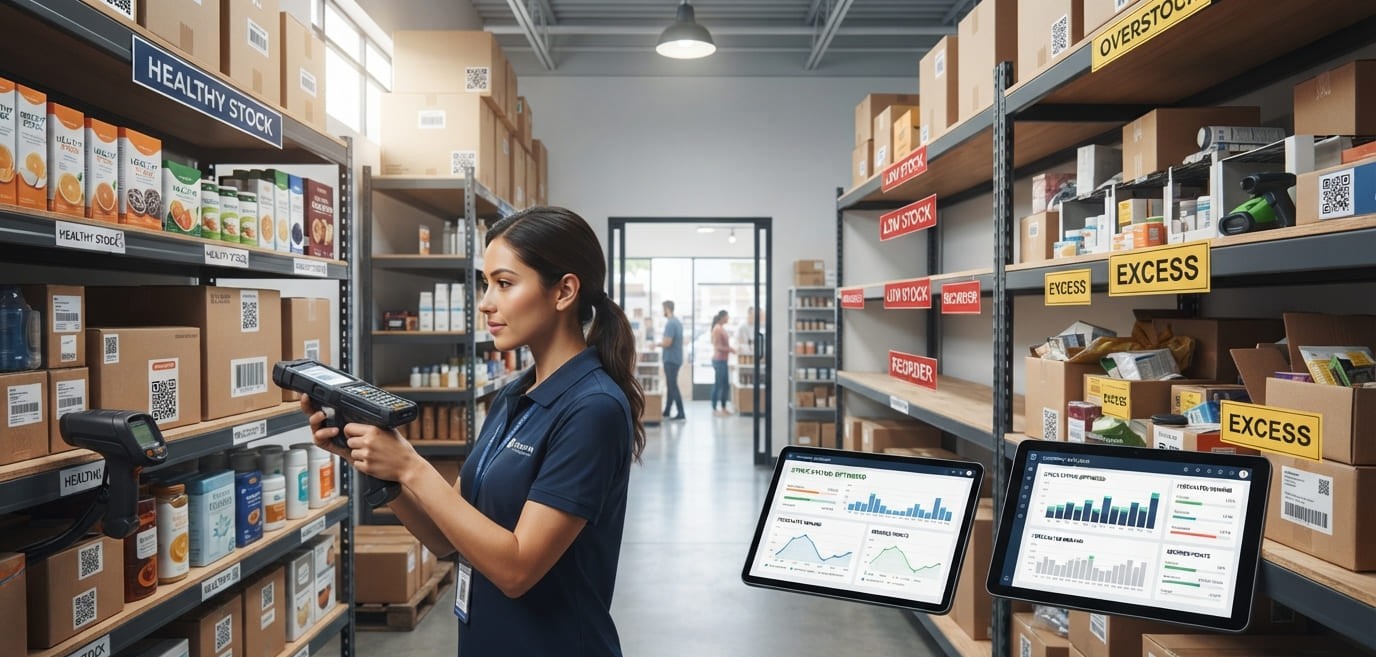
Retail businesses succeed when they have the right products available at the right time without tying up unnecessary capital in excess stock. However, maintaining this balance is challenging. Poor inventory decisions can lead to empty shelves, lost sales, overstocked warehouses, higher carrying costs, and inaccurate demand planning.
Retail inventory management is the process of tracking, controlling, and optimizing merchandise from purchasing and receiving to storage, replenishment, and final sale. Modern retailers increasingly rely on inventory visibility, accurate stock data, demand forecasting, and automation to maintain optimal stock levels.
A reliable inventory strategy helps businesses reduce stockouts, improve inventory turnover, increase operational efficiency, and make faster decisions based on real-time information. Platforms that combine mobile tracking, barcode scanning, workflow automation, and synchronized inventory data help retailers move away from manual tracking methods and create more accurate inventory processes.
What Is Retail Inventory Management?
Retail inventory management involves monitoring product quantities, stock movement, purchasing requirements, and product availability across stores, warehouses, and sales channels.
An effective inventory management process includes:
Tracking stock levels
Managing product quantities
Setting reorder points
Maintaining safety stock
Monitoring sales velocity
Reducing excess inventory
Improving inventory accuracy
Retailers must continuously answer important questions:
How much inventory should be kept?
When should products be reordered?
Which products require more stock?
Which items are becoming slow-moving?
How can stockouts and overstock situations be prevented?
The goal is not simply to hold more inventory. The goal is to maintain the optimal inventory level that supports customer demand while controlling costs.
Why Optimizing Stock Levels Matters in Retail
Optimizing stock levels creates a balance between product availability and inventory investment.
Too little inventory creates:
Stockouts
Lost sales
Poor customer experience
Missed revenue opportunities
Too much inventory creates:
Higher storage costs
Excess inventory
Slow-moving stock
Reduced cash flow
Product markdowns
Retail inventory optimization helps businesses improve:
Customer satisfaction
Inventory turnover
Working capital efficiency
Sales performance
Operational visibility
A retailer with accurate inventory data can make better purchasing decisions and avoid relying on assumptions.
Key Strategies for Optimizing Retail Inventory Levels
1. Use Demand Forecasting to Predict Stock Requirements
Demand forecasting is one of the most important elements of inventory planning. It helps retailers estimate future product demand using historical sales data, customer behavior, seasonal patterns, promotions, and market trends.
Accurate retail demand forecasting helps businesses:
Predict future inventory needs
Prepare for seasonal demand
Reduce excess inventory
Prevent product shortages
Retailers should analyze:
Previous sales performance
Sales velocity
Demand fluctuations
Customer purchasing patterns
Promotional periods
Seasonal trends
AI-powered inventory solutions can further improve forecasting by identifying patterns in inventory data and helping teams make faster decisions.
2. Establish Accurate Reorder Points
A reorder point determines when a retailer should purchase additional inventory before stock reaches a critical level.
The basic reorder point formula is:
Reorder Point = (Average Daily Demand × Lead Time) + Safety Stock
For example, if a product sells 20 units daily, supplier delivery takes 10 days, and safety stock is 50 units:
20 × 10 + 50 = 250 units
The retailer should reorder when inventory reaches approximately 250 units.
Effective reorder point management prevents:
Unexpected stock shortages
Emergency purchases
Customer dissatisfaction
3. Maintain Appropriate Safety Stock Levels
Safety stock acts as a buffer against unexpected changes in demand or supply delays.
Retailers use safety stock to protect against:
Demand spikes
Supplier delays
Seasonal uncertainty
Shipping disruptions
However, excessive safety stock can increase holding costs. Businesses should calculate safety stock based on demand variability, supplier reliability, and required service levels.
The right safety stock level improves product availability without creating unnecessary inventory expenses.
4. Improve Inventory Accuracy With Real-Time Tracking
Inventory accuracy is essential because every inventory decision depends on reliable data.
Common causes of inaccurate inventory records include:
Manual data entry errors
Missing stock updates
Incorrect product counts
Poor inventory tracking processes
Retailers can improve accuracy through:
Barcode scanning
QR code tracking
Mobile inventory updates
Cycle counting
Automated stock adjustments
Modern inventory platforms allow teams to update stock information instantly and synchronize inventory records across locations. GearChain, for example, combines mobile inventory tracking, barcode scanning, custom workflows, and spreadsheet synchronization to improve inventory visibility and accuracy.
5. Apply ABC Inventory Analysis
ABC analysis helps retailers prioritize inventory based on importance and value.
Products are commonly classified as:
A Items
High-value products requiring close monitoring.
B Items
Moderate-value products requiring regular management.
C Items
Lower-value products that can be managed with simpler controls.
ABC analysis helps retailers allocate resources effectively and create different inventory strategies for different product categories.
Combining ABC analysis with demand variability analysis allows businesses to understand which products need higher availability and which products require tighter control.
6. Monitor Inventory Turnover and Stock Performance
Inventory turnover measures how efficiently products are sold and replaced.
A healthy inventory turnover ratio indicates that products are moving effectively without excessive stock accumulation.
Important inventory KPIs include:
Inventory turnover ratio
Sell-through rate
Stockout rate
Inventory accuracy
Carrying costs
Days of inventory supply
Weeks of supply
Gross margin return on investment (GMROI)
Tracking these metrics helps retailers identify:
Fast-selling products
Slow-moving inventory
Overstock risks
Opportunities for improvement
7. Reduce Excess Inventory and Slow-Moving Stock
Excess inventory reduces profitability because money remains tied up in products that are not selling.
Common causes include:
Poor demand forecasting
Over-ordering
Changing customer preferences
Inefficient replenishment
Retailers can reduce excess stock through:
Better forecasting
SKU performance analysis
Product lifecycle monitoring
Clearance planning
Inventory optimization
Identifying dead stock early allows businesses to take corrective action before products lose value.
8. Use Technology to Automate Inventory Management
Traditional spreadsheets can become difficult to manage as inventory grows. Modern retail inventory management systems provide better visibility, automation, and collaboration.
Technology solutions can support:
Real-time inventory tracking
Barcode scanning
Automated reorder alerts
Inventory dashboards
Multi-location inventory management
Data synchronization
No-code inventory platforms help businesses create customized workflows without complex development requirements. GearChain provides inventory tracking capabilities with barcode scanning, mobile workflows, spreadsheet synchronization, and customizable forms for different operational needs.
9. Manage Inventory Across Multiple Locations
Retailers operating multiple stores or warehouses need centralized inventory visibility.
Multi-location inventory management helps businesses:
Track stock across locations
Transfer inventory efficiently
Prevent duplicate purchasing
Improve fulfillment decisions
Omnichannel retailers especially need synchronized inventory data across physical stores, warehouses, and online sales channels.
Accurate inventory visibility reduces overselling and improves customer experiences.
Common Retail Inventory Management Mistakes
Many retailers struggle because of:
Relying on manual tracking
Ignoring demand changes
Keeping excessive safety stock
Failing to monitor inventory KPIs
Poor supplier coordination
Infrequent inventory counting
Lack of real-time stock visibility
Avoiding these mistakes creates a more efficient and predictable inventory process.
Best Practices for Retail Inventory Optimization
Retailers should follow these practices:
Track inventory in real time
Analyze demand patterns regularly
Set accurate reorder points
Maintain appropriate safety stock
Monitor inventory performance metrics
Conduct regular cycle counts
Reduce slow-moving inventory
Automate repetitive inventory tasks
Improve supplier communication
Use data-driven inventory decisions
A successful inventory strategy combines accurate data, efficient processes, and technology-driven visibility.
Frequently Asked Questions
What is retail inventory management?
Retail inventory management is the process of tracking, organizing, and controlling products from purchasing to sale. It helps businesses maintain accurate stock levels, prevent shortages, reduce excess inventory, and improve product availability while controlling operational costs.
How do retailers optimize inventory levels?
Retailers optimize inventory levels by using demand forecasting, reorder points, safety stock calculations, inventory tracking systems, sales analysis, and replenishment strategies. These methods help maintain enough products for customers while avoiding unnecessary excess stock.
What is the best way to prevent stockouts in retail?
The best way to prevent stockouts is to combine accurate demand forecasting, safety stock planning, reorder point management, and real-time inventory tracking. These methods help retailers identify low inventory before products become unavailable.
How does demand forecasting improve inventory management?
Demand forecasting improves inventory management by predicting future customer demand using historical sales data, seasonal patterns, and market trends. Better forecasts help retailers purchase the right quantity of products and reduce both shortages and excess inventory.
What inventory KPIs should retailers track?
Retailers should track inventory turnover, sell-through rate, stockout rate, inventory accuracy, carrying costs, days of supply, and gross margin return on investment. These metrics show how efficiently inventory is managed and where improvements are needed.
How can technology improve retail inventory management?
Technology improves retail inventory management through barcode scanning, real-time tracking, automated alerts, inventory dashboards, and synchronized data. These tools reduce manual errors, improve visibility, and help teams make faster inventory decisions.

Enter email to get Free Google Sheets Template
We’ll email you a quick verification link. Click it to confirm your address and your template will open automatically.
Enter email to get Free Excel Template
We’ll email you a quick verification link. Click it to confirm your address and your template will open automatically.