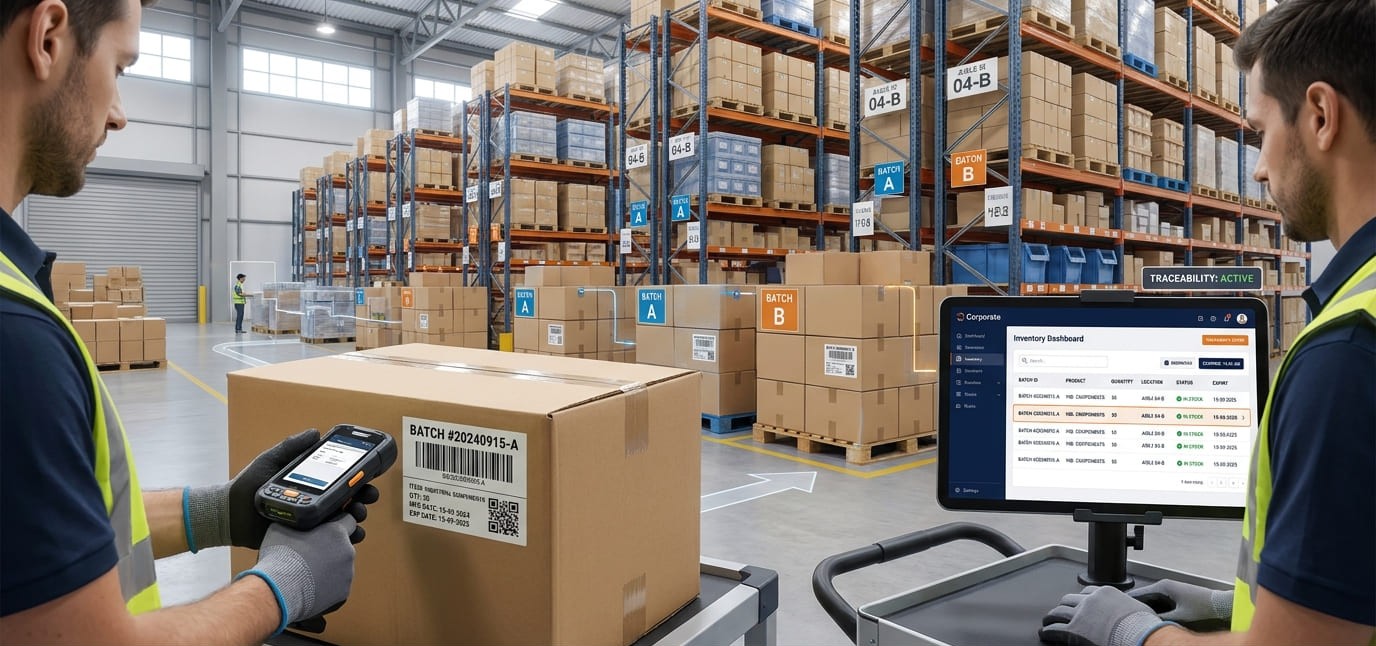
Managing inventory becomes more challenging when identical products have different manufacturing dates, suppliers, expiration dates, or quality records. Knowing how many units are available is not always enough. Businesses also need to know which group of products they belong to, where they came from, and where they have gone. This is where batch tracking in inventory management becomes essential.
Batch tracking allows businesses to organize products into identifiable groups and monitor their movement throughout the supply chain. It improves inventory visibility, supports product traceability, simplifies recalls, and helps prevent expired or defective products from reaching customers.
What Is Batch Tracking in Inventory Management?
Batch tracking is an inventory management method that assigns a unique batch number or lot number to a group of products manufactured, received, or processed under defined conditions. Businesses use this identifier to monitor the group's quantities, location, production details, and movement history.
For example, a food manufacturer produces 1,000 bottles of juice during one production run. All bottles belong to the same batch and share its batch number. If a quality issue occurs, the manufacturer can identify the affected products without automatically recalling every bottle of that juice brand.
Unlike a SKU, which identifies a product type or variant, a batch number identifies a particular group of inventory. Batch and lot tracking are often used interchangeably, although some businesses distinguish production batches from broader inventory lots.
How Does Batch Tracking Work?
An effective batch tracking process follows inventory from receiving or production through storage, distribution, and final delivery.
1. Assign or Record Batch Numbers
Manufacturers assign batch numbers to products during production. Distributors and retailers generally record the existing supplier batch or lot number when receiving goods. Each identifier should be associated with the correct product and inventory record.
2. Record Batch Information During Receiving
When stock arrives, employees record the batch number, product name, quantity, supplier, receiving date, and relevant manufacturing or expiration dates. This creates the initial batch inventory record.
3. Track Storage and Inventory Movements
Businesses record where each batch is stored and update its location when products move between warehouses, shelves, or departments. This helps employees locate specific batches instead of relying only on total stock quantities.
4. Manage Picking and Shipping
During order fulfillment, employees select the appropriate batch according to stock rotation rules, customer requirements, and product status. Recording the batch against the outgoing order helps maintain forward traceability.
5. Maintain Batch History
A complete record connects receiving, production, transfers, inspections, adjustments, and shipments. This information helps businesses investigate quality issues and identify affected inventory quickly.
Common Use Cases of Batch Tracking
Batch tracking is particularly valuable in industries where product quality, expiration dates, manufacturing history, or regulatory requirements matter.
Food and beverage: Manufacturers and distributors track production dates, ingredients, shelf life, and expiration dates to support food safety and product recalls.
Pharmaceuticals: Businesses monitor medicine batches, manufacturing details, expiry dates, and distribution records to help control product quality.
Manufacturing: Companies connect raw material batches with production runs and finished goods to investigate defects and identify affected products.
Cosmetics: Manufacturers track production batches, ingredients, and product distribution to support quality investigations and customer safety.
Agriculture: Businesses track seed, fertilizer, chemical, and harvested-product batches to maintain supplier and production records.
Wholesale and distribution: Distributors monitor batch quantities across storage locations and customer shipments to improve stock visibility.
How Batch Tracking Improves Product Traceability
Product traceability means being able to follow products through their supply chain. Batch tracking supports two important types of traceability.
Backward traceability identifies where a batch originated, including its supplier, raw materials, manufacturing date, and production records.
Forward traceability identifies where a batch was distributed, including warehouses, retailers, distributors, and customers.
Manufacturers can also use batch genealogy to connect raw material lots with finished product batches. For example, if a production run uses ingredients from three suppliers, its records can show which ingredient batches contributed to the finished products.
This information is particularly useful during product recalls. Instead of investigating an entire product category, businesses can identify the affected batches, check remaining stock, and trace relevant shipments.
FIFO vs FEFO: Which Inventory Rotation Method Should You Use?
Batch tracking provides the information businesses need to apply appropriate stock rotation methods.
FIFO is commonly suitable for general inventory rotation, while FEFO is particularly important for products with expiration dates, such as food, pharmaceuticals, and cosmetics.
For example, a warehouse might receive two batches of the same product. Batch A expires in December, while Batch B expires in March. Even if Batch B arrived first, FEFO prioritizes Batch A because it expires sooner.
LIFO may suit certain non-perishable inventory situations, but it is generally unsuitable for products requiring expiration-based rotation.
Best Practices for Effective Batch Tracking
Businesses can improve batch inventory management by following consistent procedures:
Standardize batch numbering: Establish clear rules for assigning, recording, and identifying batch numbers.
Capture information at receiving: Record supplier details, quantities, manufacturing dates, and expiration dates when stock arrives.
Use barcode or QR labels: Make batch identification easier and reduce manual data-entry errors.
Keep batches separate in records: Do not combine inventory from different batches when their expiry dates or quality status differ.
Apply FIFO or FEFO appropriately: Select stock according to product characteristics and business requirements.
Maintain movement records: Record transfers, issues, adjustments, and shipments against the correct batch.
Conduct regular audits: Compare physical inventory with batch-level digital records and investigate discrepancies.
Train employees: Ensure warehouse teams understand labeling, scanning, stock rotation, and recordkeeping procedures.
How to Implement Batch Tracking in Inventory Management
Start by identifying which products require batch-level visibility. Perishable goods, manufacturing materials, pharmaceuticals, and products subject to quality inspections are common priorities.
Next, define the information each batch record needs. Typical fields include product name, SKU, batch number, supplier, quantity, storage location, manufacturing date, expiration date, and current status.
Choose a suitable inventory management system that supports the fields and workflows your business requires. Barcode scanning can make batch identification faster, while digital records help teams review stock movements and maintain consistent information.
Businesses can explore barcode inventory management to understand how scanning supports inventory identification. Mobile inventory tracking can also help teams record stock activity from different locations.
GearChain provides configurable inventory forms, barcode and QR code scanning, mobile inventory workflows, and spreadsheet synchronization. Teams can configure relevant inventory fields to record batch-related information and use shared records to monitor stock activity. Its inventory management software supports receiving, issuing, transfers, and inventory history. Businesses managing several sites can also explore multi-location inventory management.
For manufacturing operations, manufacturing inventory management provides additional context on managing materials and production inventory. Businesses can also explore track and trace solutions to understand product movement and traceability workflows.
Common Batch Tracking Mistakes to Avoid
Even a well-designed process can fail when inventory records are incomplete. Common mistakes include duplicate batch numbers, missing supplier information, incorrect expiration dates, mixing different batches, and failing to record stock transfers.
Another frequent problem is relying on FIFO when FEFO is required. Products received earlier do not necessarily expire earlier, so businesses should maintain accurate expiry information.
To prevent these issues, establish standard operating procedures, validate batch information during receiving, use consistent labels, and conduct regular inventory audits.
Conclusion
Batch tracking in inventory management helps businesses monitor groups of products from receiving and production to storage and distribution. It improves inventory visibility, supports FIFO and FEFO stock rotation, strengthens product traceability, and helps identify affected products during quality investigations or recalls.
The most effective approach combines accurate batch records, consistent identification, barcode-assisted data capture, and regular inventory checks. By choosing the right processes and tools, businesses can reduce avoidable waste, improve accountability, and maintain better control over their inventory.
Frequently Asked Questions
What is batch tracking in inventory management?
Batch tracking is a method of monitoring groups of products using unique batch or lot numbers. It helps businesses record product origins, quantities, locations, expiration dates, and movements, making inventory management and product traceability more reliable.
How does batch tracking work?
Businesses assign or record a batch number when products are manufactured or received. They then update its inventory record during storage, transfers, picking, and shipping, creating a history that supports traceability, stock rotation, and quality investigations.
What is the difference between batch tracking and lot tracking?
Batch tracking generally follows products manufactured or processed together, while lot tracking identifies a traceable group of inventory. The terms are frequently interchangeable in business operations, although some organizations use different definitions based on their processes.
What is the difference between FIFO and FEFO?
FIFO means First In, First Out, so the oldest received stock is used first. FEFO means First Expired, First Out, prioritizing products with the earliest expiration dates, making it particularly useful for perishable and pharmaceutical inventory.
Why is batch tracking important in manufacturing?
Batch tracking connects raw materials, production activities, quality inspections, and finished goods. Manufacturers can investigate defects, identify affected production runs, trace material suppliers, and locate distributed products when quality or safety problems arise.
Can you track batch numbers using barcodes?
Yes. Businesses can encode batch identifiers in barcode or QR code labels and scan them during receiving, storage, and shipping. The inventory system must associate each scanned identifier with the correct batch records and transactions.