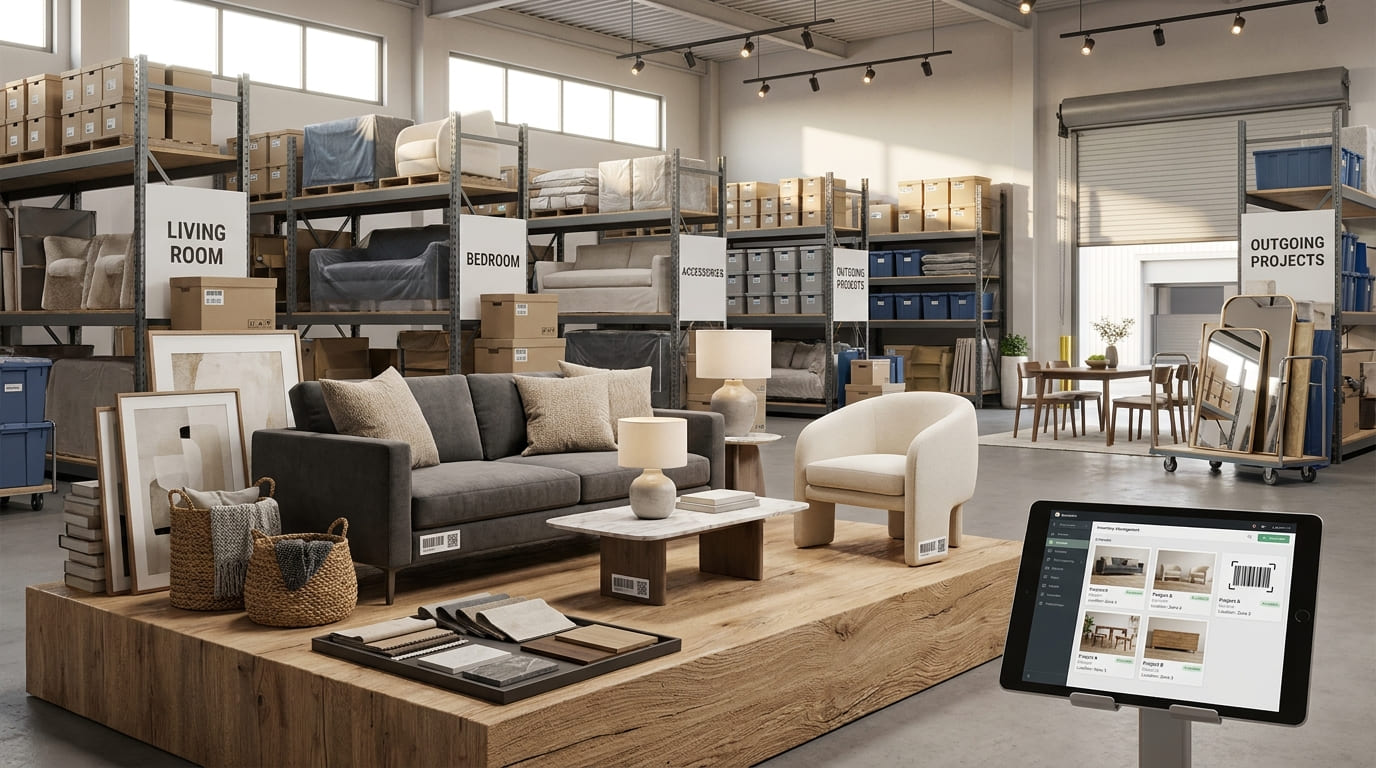
Creative projects often look effortless when the final space is revealed, but behind every successful interior design project or staged property is a complex process of selecting, sourcing, storing, tracking, and managing hundreds of items. Furniture, décor, lighting, artwork, accessories, materials, and samples must be available at the right time and in the right location.
Without a structured interior design inventory management process, teams can face misplaced furniture, unavailable items, duplicate purchases, delayed installations, and unnecessary storage costs.
For interior designers, home stagers, and creative teams managing multiple projects, inventory is not just a list of products. It is a collection of valuable assets that move through different stages, from sourcing and receiving to storage, project allocation, installation, and return.
Modern inventory platforms help businesses replace disconnected spreadsheets with organized workflows, barcode tracking, digital catalogs, real-time updates, and better visibility across teams. GearChain supports flexible inventory tracking through barcode scanning, spreadsheet synchronization, custom workflows, and mobile inventory management capabilities.
Why Inventory Management Matters in Interior Design and Staging
Interior design projects involve many moving parts. A designer may select a sofa for one property, reserve artwork for another project, store lighting fixtures in a warehouse, and manage material samples for multiple clients simultaneously.
This makes inventory management for interior designers essential for maintaining control over creative assets.
A reliable inventory system helps teams:
Know what items are available
Track furniture locations
Prevent duplicate purchases
Allocate items to specific projects
Monitor inventory condition
Improve warehouse organization
Reduce project delays
Maintain accurate records
For home staging companies, inventory management becomes even more important because furniture and décor constantly move between properties. A dining table may be installed in one home today, returned to storage next month, and assigned to another project afterward.
Without proper tracking, valuable staging furniture can easily become lost, damaged, or unavailable when needed.
Understanding Creative Project Inventory
Unlike traditional retail inventory, interior design and staging inventory is project-based. Items are not simply sold and removed from stock. They are repeatedly selected, moved, installed, returned, and reused.
Creative project inventory may include:
Furniture
Sofas and sectionals
Dining tables and chairs
Beds and headboards
Cabinets
Desks
Coffee tables
Accent chairs
Décor Items
Artwork
Mirrors
Lamps
Rugs
Cushions
Decorative accessories
Plants and planters
Design Materials
Fabric samples
Wallpaper samples
Flooring samples
Tile samples
Stone samples
Paint samples
Hardware finishes
FF&E Items
FF&E (Furniture, Fixtures, and Equipment) represents a major category within professional interior design projects. FF&E inventory management helps teams organize specifications, purchasing information, delivery status, installation requirements, and item history.
A complete inventory record should include:
Item name
Category
Photos
Dimensions
Quantity
Location
Condition
Project assignment
Availability status
Building an Effective Interior Design Inventory System
A strong inventory system begins with creating a centralized digital catalog.
Instead of relying on separate spreadsheets, emails, or handwritten notes, teams can create structured records where every item has complete information.
Important inventory fields include:
Item Identification
Each asset should have a unique identifier such as:
SKU
Barcode
QR code
Asset tag
Product ID
Barcode inventory tracking makes it easier for teams to scan items during receiving, movement, installation, and return processes.
Visual Documentation
Interior design depends heavily on appearance. Adding product images allows teams to quickly identify:
Furniture style
Color
Material
Condition
Previous project usage
Visual inventory catalogs reduce confusion and make selection faster.
Location Tracking
Knowing where an item is stored is one of the biggest challenges for creative teams.
Inventory location tracking helps answer questions like:
Is the sofa in the warehouse?
Which project currently uses the dining chairs?
Where are the fabric samples stored?
Has the artwork returned after staging?
A digital inventory system can track:
Warehouse location
Storage area
Project location
Room assignment
Movement history
Managing Furniture Inventory Across Multiple Projects
One of the biggest challenges for staging companies is sharing inventory between different properties.
A successful home staging inventory management workflow usually follows this process:
1. Inventory Available
Furniture and décor remain stored and ready for assignment.
2. Project Allocation
Items are reserved for a specific:
Client
Property
Room
Installation date
3. Check-Out
Items leave storage and move to the staging location.
4. Installation
Furniture is placed according to the design plan.
5. De-Staging
After the property sells or the project ends, items return.
6. Inspection and Check-In
Items are checked for:
Damage
Missing components
Cleaning requirements
Repairs
7. Return to Available Inventory
The item becomes available for future projects.
This inventory lifecycle prevents double booking and improves furniture utilization.
Improving Warehouse Organization for Staging Businesses
A staging warehouse can quickly become difficult to manage without proper organization.
Effective staging warehouse organization includes:
Categorizing Items
Group products by:
Furniture type
Room usage
Style
Size
Material
Examples:
Living room furniture
Bedroom furniture
Dining furniture
Accessories
Lighting
Creating Storage Locations
Use clear location identifiers:
Warehouse zones
Shelving numbers
Storage bins
Rack locations
Using Barcode and QR Tracking
Barcode scanning allows teams to update inventory quickly without manually searching through records.
Platforms like GearChain support barcode label printing, scanning workflows, mobile tracking, and connections with spreadsheet systems such as Google Sheets and Excel.
Connecting Procurement With Inventory Management
Interior design inventory begins before an item reaches storage.
The procurement process includes:
Product selection
Vendor communication
Quotations
Purchase orders
Delivery tracking
Receiving
Installation
When procurement and inventory systems work together, teams can track:
Ordered items
Expected delivery dates
Lead times
Supplier information
Receiving status
This creates better visibility from purchase order to final installation.
Managing Material Samples and Design Libraries
Interior designers often manage hundreds of samples.
A professional material sample management system helps organize:
Fabric swatches
Tile samples
Wood finishes
Stone samples
Wallpaper samples
Paint cards
Each sample can include:
Supplier details
Material type
Project usage
Storage location
Checkout status
A digital sample library prevents designers from losing important materials and reduces repeated requests from suppliers.
Using Technology to Simplify Creative Inventory Management
Traditional spreadsheets can work for small projects, but growing design teams often need more advanced inventory visibility.
Modern inventory management systems provide:
Mobile inventory tracking
Barcode scanning
Digital catalogs
Real-time updates
Multi-user collaboration
Inventory reporting
GearChain focuses on making inventory easier to manage through mobile-first workflows, barcode scanning, AI-assisted insights, customizable fields, and integrations with existing spreadsheet workflows.
For creative businesses, this means teams can spend less time searching for items and more time focusing on design decisions.
Benefits of Better Inventory Management for Creative Projects
A structured inventory workflow delivers measurable improvements:
Faster Project Execution
Teams can quickly locate furniture, materials, and décor without unnecessary searching.
Reduced Costs
Better tracking helps prevent:
Duplicate purchases
Lost items
Overstocking
Unnecessary replacements
Better Client Experience
Projects stay on schedule because required items are available when needed.
Improved Asset Utilization
Teams can identify which items are frequently used and which assets are sitting unused.
Stronger Team Collaboration
Designers, warehouse staff, installers, and project managers can work from the same inventory information.
The Future of Interior Design Inventory Management
As creative projects become more complex, inventory management will continue moving toward smarter digital solutions.
Future-focused systems will combine:
AI-powered insights
Automated tracking
Barcode and QR scanning
Real-time reporting
Predictive inventory planning
Connected workflows
For interior designers and staging professionals, inventory management is becoming less about counting items and more about creating a complete view of every asset throughout its lifecycle.
By combining creative vision with organized inventory control, businesses can deliver projects faster, reduce operational challenges, and maximize the value of every piece they own.
FAQs
How do interior designers manage inventory?
Interior designers manage inventory by using digital catalogs, item tracking systems, spreadsheets, barcode labels, and project allocation workflows. They track furniture, décor, materials, locations, availability, and condition to keep projects organized.
How do you organize inventory for home staging?
Home staging inventory is organized by categorizing furniture and décor, assigning storage locations, adding item records, tracking movement, and managing check-in and check-out processes between properties and warehouses.
What is FF&E inventory management?
FF&E inventory management is the process of tracking furniture, fixtures, and equipment throughout a project lifecycle. It includes procurement, receiving, storage, installation, condition tracking, and asset management.
How can interior designers track furniture?
Interior designers can track furniture using inventory software, barcode labels, QR codes, digital catalogs, and location tracking. These tools help identify item availability, project assignments, storage locations, and movement history.
What is the best way to manage staging furniture inventory?
The best way to manage staging furniture inventory is by combining organized storage, digital tracking, barcode scanning, project allocation, and regular condition checks to prevent losses and improve availability.
Why is inventory management important for creative projects?
Inventory management helps creative teams control valuable assets, avoid delays, reduce unnecessary purchases, improve collaboration, and ensure furniture, materials, and décor are available when each project requires them.