Managing HVAC and Plumbing Inventory: Best Practices and Solutions
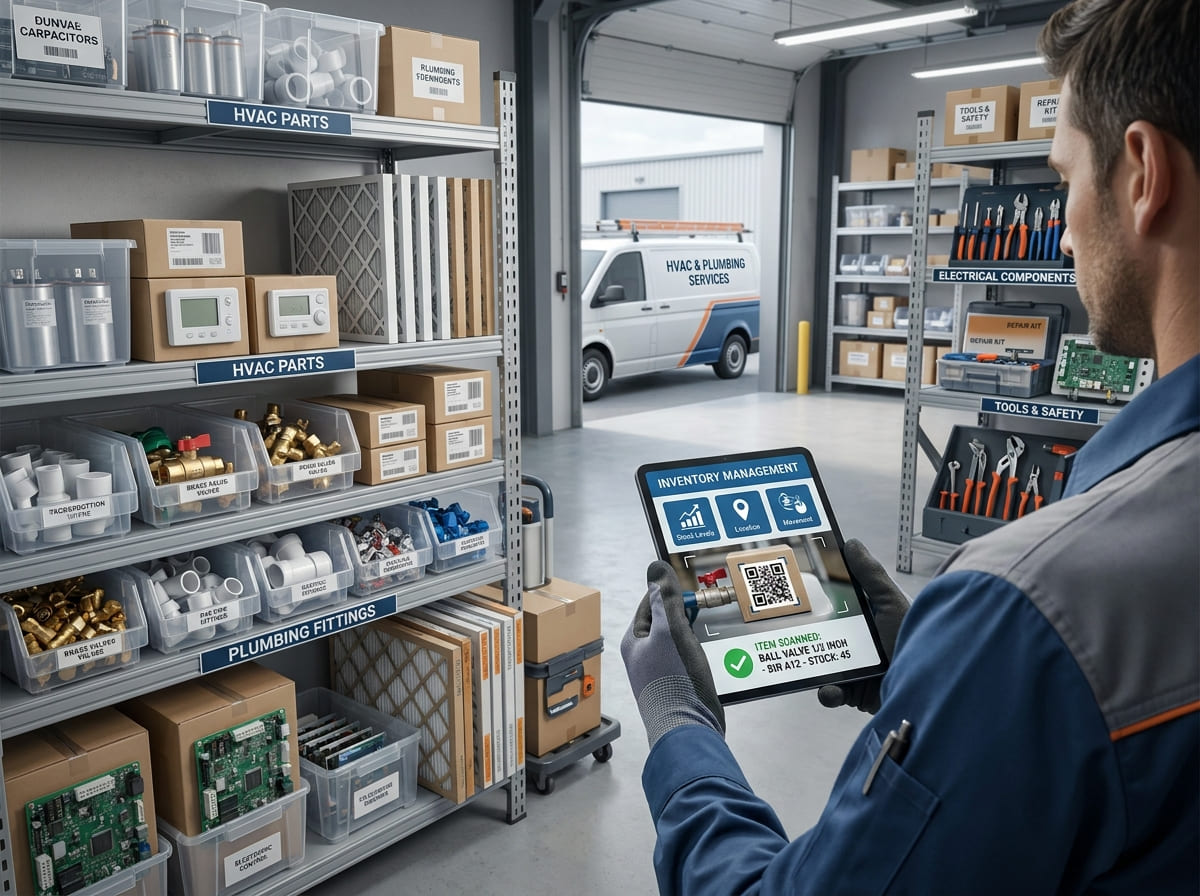
HVAC and plumbing businesses depend on having the right parts available at the right time. A missing capacitor, valve, fitting, filter, or replacement component can delay a job, increase technician downtime, and create unnecessary supply runs. As service operations grow, managing inventory across warehouses, service trucks, vans, and job sites becomes increasingly complex.
Effective HVAC and plumbing inventory management is not only about knowing how many parts are available. It involves tracking inventory movement, monitoring stock levels, improving inventory accuracy, reducing waste, and ensuring technicians have access to the materials they need to complete jobs efficiently.
Modern inventory systems help businesses move away from spreadsheets, manual counts, and disconnected records by providing real-time inventory visibility, barcode scanning, mobile tracking, and centralized data management. Platforms such as GearChain support businesses that need flexible inventory tracking workflows, barcode-based updates, and better control over parts, assets, and stock movement.
Why HVAC and Plumbing Inventory Management Matters
HVAC contractors and plumbing companies manage hundreds or thousands of inventory items, including replacement parts, tools, equipment, consumables, and installation materials.
Unlike traditional warehouse businesses, service companies often manage inventory in multiple locations:
Central warehouses
Storage rooms
Service vehicles
Technician vans
Temporary job sites
Customer locations
Without proper inventory control, companies often experience:
Missing parts
Stock shortages
Overstocking
Duplicate purchases
Emergency supply runs
Delayed service appointments
Increased material costs
Poor inventory visibility
A technician arriving at a customer location without the correct part may require another visit, reducing productivity and affecting customer satisfaction. Proper parts tracking helps companies improve first-time fix rates while reducing unnecessary operational costs.
Common Inventory Challenges for HVAC and Plumbing Companies
1. Tracking Parts Across Multiple Locations
One of the biggest challenges is knowing where inventory is located.
A replacement part may exist in a warehouse, a service truck, or another technician’s vehicle. Without location-based inventory tracking, employees waste time searching for items or purchasing replacements unnecessarily.
A strong inventory management system should provide visibility into:
Current stock quantities
Item locations
Parts movement history
Assigned technicians
Vehicle inventory
Warehouse inventory
Mobile inventory management allows teams to update stock immediately when parts are received, transferred, installed, or returned.
2. Managing Service Truck and Van Inventory
For HVAC and plumbing contractors, a service truck is essentially a mobile warehouse.
Technicians commonly carry:
HVAC truck inventory examples:
Air filters
Capacitors
Contactors
Thermostats
Fuses
Fan motors
Refrigerant supplies
Control boards
Electrical components
Plumbing truck inventory examples:
Pipe fittings
Valves
Connectors
Drain components
Faucet cartridges
Water heater parts
Sealants
Repair kits
Without standardized truck stock management, every vehicle may have different inventory levels, making replenishment difficult.
Best practices include:
Creating standard truck inventory lists
Setting minimum and maximum stock levels
Tracking parts used on jobs
Performing regular vehicle inventory checks
Recording transfers between trucks
Best Practices for HVAC and Plumbing Inventory Control
1. Create a Centralized Inventory System
A centralized inventory database gives managers and technicians one reliable source of information.
Instead of relying on separate spreadsheets or manual records, businesses can track:
Parts inventory
Equipment
Tools
Supplies
Stock movements
Inventory transactions
A centralized system improves inventory accuracy and makes purchasing decisions easier.
GearChain helps teams create customized inventory workflows with mobile tracking, barcode scanning, spreadsheet synchronization, and flexible forms designed around operational needs.
2. Use Barcode and QR Code Inventory Tracking
Manual inventory updates are slow and often inaccurate.
Barcode scanning allows technicians and warehouse teams to quickly:
Receive inventory
Check items out
Transfer stock
Perform cycle counts
Update quantities
Barcode inventory tracking reduces data-entry mistakes and provides faster updates compared with handwritten records.
For HVAC and plumbing businesses, scanning every part movement creates a clearer record of:
What was used
Who used it
Where it was used
When inventory needs replenishment
3. Set Reorder Points and Stock Levels
Running out of essential parts can stop service operations.
Businesses should establish:
Minimum stock levels
Maximum stock levels
Safety stock quantities
Reorder points
Low-stock alerts
For example, if a commonly used HVAC capacitor reaches its reorder threshold, the system should notify the purchasing team before technicians run out.
Inventory replenishment should be based on:
Historical usage
Seasonal demand
Supplier lead times
Customer demand patterns
4. Perform Regular Inventory Counts
Even with digital tracking, physical inventory checks remain important.
Useful methods include:
Cycle counting
Instead of counting everything once a year, companies regularly check smaller inventory groups.
Benefits include:
Higher inventory accuracy
Faster error detection
Better stock visibility
Inventory audits
Audits help identify:
Missing parts
Incorrect quantities
Damaged items
Unrecorded usage
Improving HVAC and Plumbing Parts Tracking
Parts tracking connects inventory management with daily service operations.
Every part movement should ideally connect with:
Work orders
Service calls
Purchase records
Technician activity
Customer jobs
When technicians use materials, the inventory system should automatically update stock levels.
This prevents:
Unrecorded parts usage
Incorrect inventory counts
Unexpected shortages
Billing mistakes
Real-time parts tracking also helps managers understand which components are used most frequently and adjust purchasing decisions accordingly.
How Inventory Software Helps HVAC and Plumbing Businesses
Traditional spreadsheets may work for small operations, but they become difficult to manage as businesses expand.
Inventory management software provides:
Real-time inventory visibility
Managers can quickly see:
Available stock
Inventory locations
Low-stock items
Usage patterns
Mobile inventory management
Technicians can update inventory directly from phones or tablets while working in the field.
Automated inventory alerts
Low-stock notifications reduce the risk of running out of critical materials.
Better reporting
Inventory reports help companies understand:
Fast-moving parts
Slow-moving inventory
Purchasing trends
Inventory costs
Stock accuracy
Reducing Inventory Costs Through Better Control
Poor inventory management creates hidden expenses.
Common unnecessary costs include:
Excess inventory
Expired materials
Duplicate purchases
Emergency orders
Excess warehouse storage
Better inventory control helps companies:
Reduce carrying costs
Improve purchasing decisions
Reduce waste
Increase profitability
Demand forecasting and historical usage analysis allow businesses to stock the right amount of inventory without overinvesting in unused materials.
The Future of HVAC and Plumbing Inventory Management
The future of service inventory management is moving toward connected, mobile, and automated workflows.
Important trends include:
Mobile inventory tracking
Barcode automation
Real-time stock updates
AI-powered inventory insights
Digital inventory records
Cloud-based inventory systems
Automated replenishment
Businesses that adopt smarter inventory processes can improve technician productivity, reduce service delays, and deliver better customer experiences.
Conclusion
Managing HVAC and plumbing inventory effectively requires more than counting parts. Successful companies need accurate tracking, organized storage, standardized truck inventory, automated replenishment, and real-time visibility.
By combining inventory best practices with modern tracking solutions, HVAC and plumbing businesses can reduce shortages, control costs, improve productivity, and ensure technicians always have the right parts available.
A flexible inventory management platform with barcode scanning, mobile workflows, and real-time tracking can help transform inventory from an operational challenge into a competitive advantage.
FAQs
How do HVAC companies manage inventory?
HVAC companies manage inventory by tracking parts across warehouses and service vehicles, setting reorder points, organizing truck stock, using barcode scanning, and monitoring parts usage. Digital inventory systems help maintain accurate stock levels and prevent shortages.
How do you track HVAC and plumbing parts?
You can track HVAC and plumbing parts by using inventory software, barcode labels, mobile scanning, and location tracking. These tools record item quantities, movement history, storage locations, and usage, making it easier to maintain accurate inventory records.
What is the best way to organize HVAC truck inventory?
The best way to organize HVAC truck inventory is to create standardized layouts, categorize parts by usage frequency, label storage areas, maintain minimum stock levels, and track every item added or removed from the vehicle.
How can plumbing companies reduce inventory costs?
Plumbing companies can reduce inventory costs by avoiding overstocking, monitoring parts usage, setting reorder points, improving purchasing decisions, and using inventory tracking systems to prevent duplicate orders and unnecessary emergency purchases.
Why is inventory management important for HVAC contractors?
Inventory management is important for HVAC contractors because it ensures technicians have required parts available, reduces delays, improves first-time fix rates, lowers operational costs, and provides better visibility into materials used across service jobs.
What features should HVAC inventory software have?
HVAC inventory software should include barcode scanning, mobile access, real-time inventory tracking, low-stock alerts, parts history, location tracking, reporting, and integration with existing workflows to improve inventory accuracy and efficiency.

Enter email to get Free Google Sheets Template
We’ll email you a quick verification link. Click it to confirm your address and your template will open automatically.
Enter email to get Free Excel Template
We’ll email you a quick verification link. Click it to confirm your address and your template will open automatically.