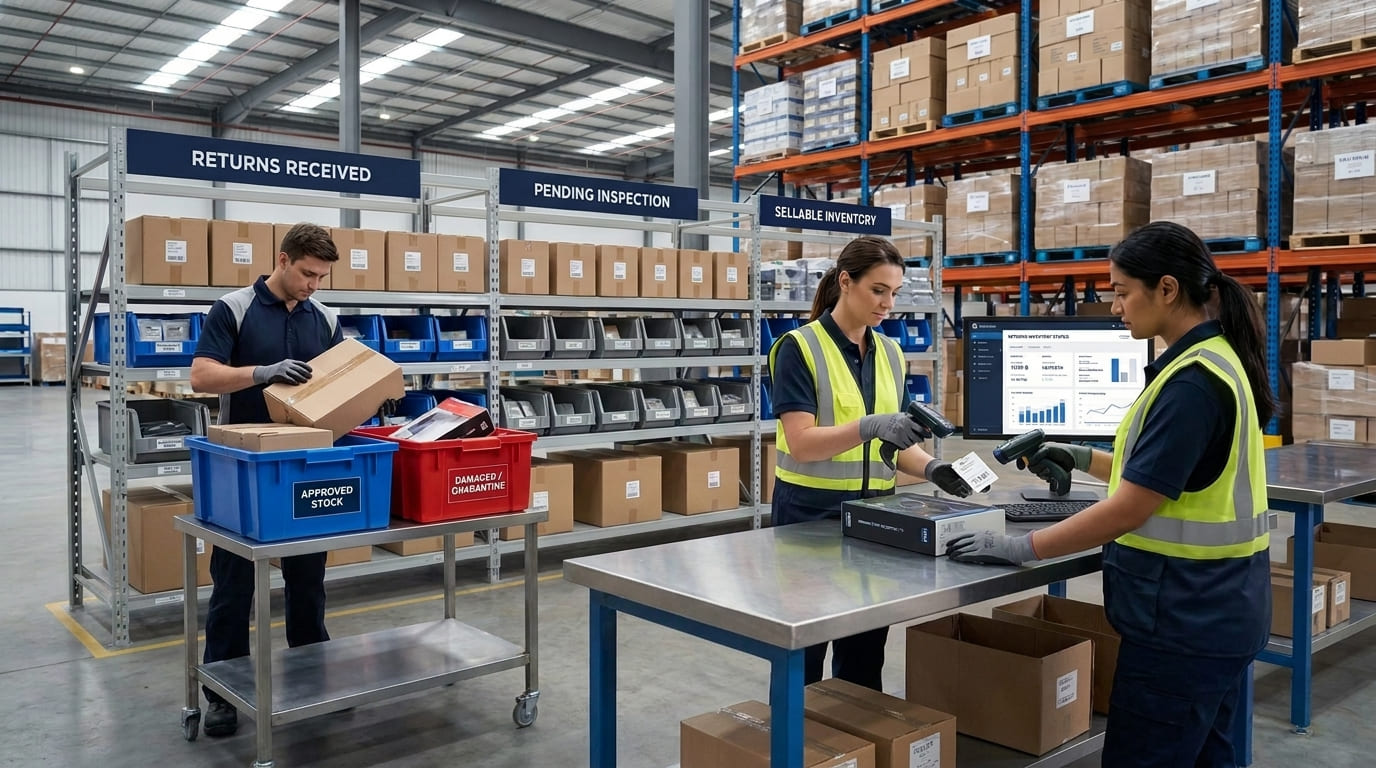
Returned products can quickly become a blind spot in inventory. A parcel may arrive at the warehouse, but until the item is identified, inspected, classified, and recorded, nobody can be certain whether it is safe to sell, needs repair, or should be removed from stock. Poor returns inventory management creates inaccurate stock counts, delays resale, and ties up warehouse space.
A reliable process gives every returned unit a clear status and next destination. The goal is simple: recover sellable stock quickly without allowing damaged, incomplete, or unverified products back into available inventory.
What Is Returns Inventory Management?
Returns inventory management is the process of receiving, identifying, inspecting, classifying and recording products that come back from customers, stores or other locations. It connects reverse logistics with everyday inventory control.
It involves more than processing a refund. Warehouse teams must verify what physically arrived, determine whether it can be reused or resold, update inventory records and move the item to the correct location. A returned product should not become available stock simply because it has reached the receiving area.
Why Is Managing Returned Stock Important?
Returned products can arrive in different conditions. One may be unopened and ready for resale, while another may be missing components, damaged or require additional testing. Adding every return directly to sellable inventory can cause overselling, repeat complaints and inaccurate stock records.
Unprocessed returns also tie up working capital. Products sitting in a returns area cannot be picked for new orders, while businesses may unnecessarily reorder products already in the warehouse. A documented process improves inventory visibility, recovers product value and identifies recurring return problems.
The Returns Inventory Management Process
1. Receive and Register Each Return
Direct returned parcels to a designated returns area instead of mixing them with regular inbound stock. Record the arrival date, package reference and quantity received. Where applicable, match the parcel to a Return Merchandise Authorization (RMA) and the original sales order.
If a return arrives without documentation, place it in an exception area until its owner and contents are confirmed. Never add unidentified products to available inventory.
2. Verify Product Identity and Quantity
Compare the returned item with the original order or return record. Check its Stock Keeping Unit (SKU), barcode, model, size, colour and serial number where relevant. Count the physical units and record any mismatch, substitution or missing component.
Barcode and QR code scanning make product identification more consistent and reduce manual data entry. They also create a reliable connection between the physical product and its digital inventory record.
3. Inspect and Grade Product Condition
Use a written inspection checklist suited to the product category. Check packaging, seals, accessories, visible damage, signs of use and functionality where testing is required. Record photographs or notes when they help explain the inspection result.
Apply consistent condition grades, such as:
Unopened: Original packaging remains sealed and intact.
Like new: Product is in excellent condition with all components.
Open-box: Packaging has been opened, but the product remains usable.
Repairable: Product requires approved repair or refurbishment.
Damaged: Product is unsuitable for normal resale.
Define each grade clearly so employees make consistent decisions. For regulated, medical or electrical products, follow applicable safety, expiry and resale requirements.
4. Assign an Inventory Disposition
After inspection, decide where each returned unit should go. Common inventory disposition options include:
Restock: Return approved products to sellable inventory.
Repackage: Correct packaging before resale.
Refurbish or repair: Send recoverable products for approved work.
Open-box resale: Sell usable products under an appropriate condition category.
Return to supplier: Send eligible defective products back to the vendor.
Quarantine: Hold products requiring further inspection or approval.
Recycle or dispose: Remove products that cannot safely or economically be recovered.
Document the reason and decision for every unit. Disposition codes make reporting easier and create an audit trail.
5. Update Inventory Records
Record the returned quantity and its condition in the inventory management system. Keep different stock statuses separate, such as received, awaiting inspection, quarantined, under repair, sellable or written off.
Only increase available-to-sell stock when the product has passed the required checks and is approved for resale. This distinction prevents physical returns from being mistaken for usable inventory.
6. Put Approved Products Away
Assign each restockable item to a defined bin, shelf or storage zone. Scan the product and location where possible, then confirm that the inventory record reflects its actual placement.
Keep quarantined and damaged products physically separate from active stock. Clear location labels and dedicated returns staging areas reduce the risk of unapproved items being picked accidentally.
7. Reconcile and Close the Return
Compare physical quantities with inventory transactions after putaway or disposition. Resolve differences promptly and retain the return reference, inspection result, reason code and final destination.
Review return reasons regularly. Repeated complaints about the same SKU may indicate inaccurate product information, packaging problems, supplier quality issues or damage during delivery.
Best Practices for Keeping Returned Stock Under Control
Create standard operating procedures for receiving, inspection, grading, disposition and putaway. Train employees using examples of acceptable and unacceptable product conditions. Assign responsibility to each stage so returns do not remain in an unmonitored holding area.
Use barcode labels and mobile inventory updates to record movements where they happen. Maintain clear stock statuses and location records, and review ageing returns regularly. Prioritize high-value or fast-moving products when inspection capacity is limited, while following applicable safety requirements.
For businesses operating across multiple facilities, consistent product identifiers and location records are particularly important. The same SKU should not appear available at one location while sitting in quarantine at another.
How Inventory Tracking Technology Helps
An inventory management system provides a shared record of returned quantities, item identifiers, locations and status changes. Barcode scanning helps staff identify products and record stock movements, while mobile access allows updates directly from the warehouse floor.
Gearchain supports barcode and QR code scanning, mobile inventory updates, real-time stock visibility across locations and inventory reporting. Teams can use these capabilities to record returned items and maintain consistent stock records. Spreadsheet synchronization can also support reporting workflows, although inspection and approval decisions still need to follow the business's own procedures.
Explore a barcode inventory system, mobile inventory tracking and multi-location inventory to see how digital records can support everyday stock control. Businesses using spreadsheets for reporting can also explore spreadsheet synchronization.
Key Returns Inventory Management Metrics to Monitor
Tracking performance helps businesses identify processing delays and improve inventory recovery.
Important metrics include:
Return-to-stock rate: Returned units approved and returned to sellable stock divided by total returned units processed, multiplied by 100.
Returns processing time: Time between physical receipt and documented disposition.
Returns backlog: Units waiting for identification, inspection or a final decision.
Inventory discrepancy rate: Returns where physical quantities or item details do not match recorded transactions.
Inventory recovery value: Value recovered through resale, refurbishment or supplier credits, measured consistently.
Review these metrics by product category, return reason and warehouse location. A low restock rate is not automatically a problem; it may reflect product quality or customer-use patterns. The objective is to make accurate decisions quickly and reduce avoidable delays.
Put Every Returned Item Back Under Control
Effective returns inventory management gives every returned unit a verified identity, condition, status and destination. When receiving, inspection, disposition and inventory updates follow a documented workflow, sellable products can return to stock sooner while damaged or unverified goods remain separated.
Use clear procedures, accurate inventory tracking and regular performance reviews to turn returned stock from an inventory blind spot into a controlled part of warehouse operations.
People Also Ask
1. What Is Returns Inventory Management?
Returns inventory management is the process of receiving, identifying, inspecting and recording products sent back by customers or locations. It determines whether each item can be restocked, repaired, resold through another channel, returned to a supplier or removed from inventory.
2. How Do You Manage Returned Inventory?
Manage returned inventory by registering each arrival, matching it to the original order, checking the SKU and quantity, inspecting its condition, assigning a disposition and updating stock records. Put approved items into a verified location and keep damaged or uninspected goods separate.
3. What Happens to Returned Items in a Warehouse?
Returned items are received and matched to a return record, then inspected and sorted by condition. Depending on the result, they may be restocked, repackaged, repaired, sent to a supplier, held for review, liquidated, recycled or disposed of.
4. Can Returned Items Be Put Back Into Inventory?
Yes, returned items can be put back into sellable inventory when they pass the business's inspection and resale requirements. Staff should verify the product, quantity and condition, update its status and record its storage location before making it available for new orders.
5. Why Shouldn't Returned Items Be Added Back to Inventory Immediately?
Returned products may be damaged, incomplete, used, expired or incorrectly identified. Adding them to sellable stock before inspection can cause inaccurate counts, unsafe sales, repeat returns and customer complaints. Keep them in a pending or quarantine status until approved.
6. How Do You Track Returned Stock?
Track returned stock using a return reference, SKU or barcode, received quantity, condition grade, disposition, current status, and storage location. Record each movement in an inventory system and reconcile the physical item with its digital record before closing the return.